
Gay Dating Sites and Apps for UK Men: 10 Options for 2026
Gay dating services range from nearby profile grids to relationship-led mainstream sites. We compared the practical differences that shape daily use: whether messaging is free, how location is handled, what privacy controls exist, and whether the community is mainly for dates, relationships, friends or casual connections.
Our 2026 recommendations
- Best for nearby discovery: Grindr
- Best for detailed community profiles: SCRUFF
- Best LGBTQ+ social option: Taimi
- Best for open relationship structures: Feeld
- Best mainstream app with a large pool: Tinder
- Best profile-led mainstream option: Match
- Best long-running UK gay community: Gaydar
- Best international gay social network: ROMEO
- Best for compatibility questions: OkCupid
- Best for prompt-led relationship dating: Hinge
Grindr
Best nearby discovery
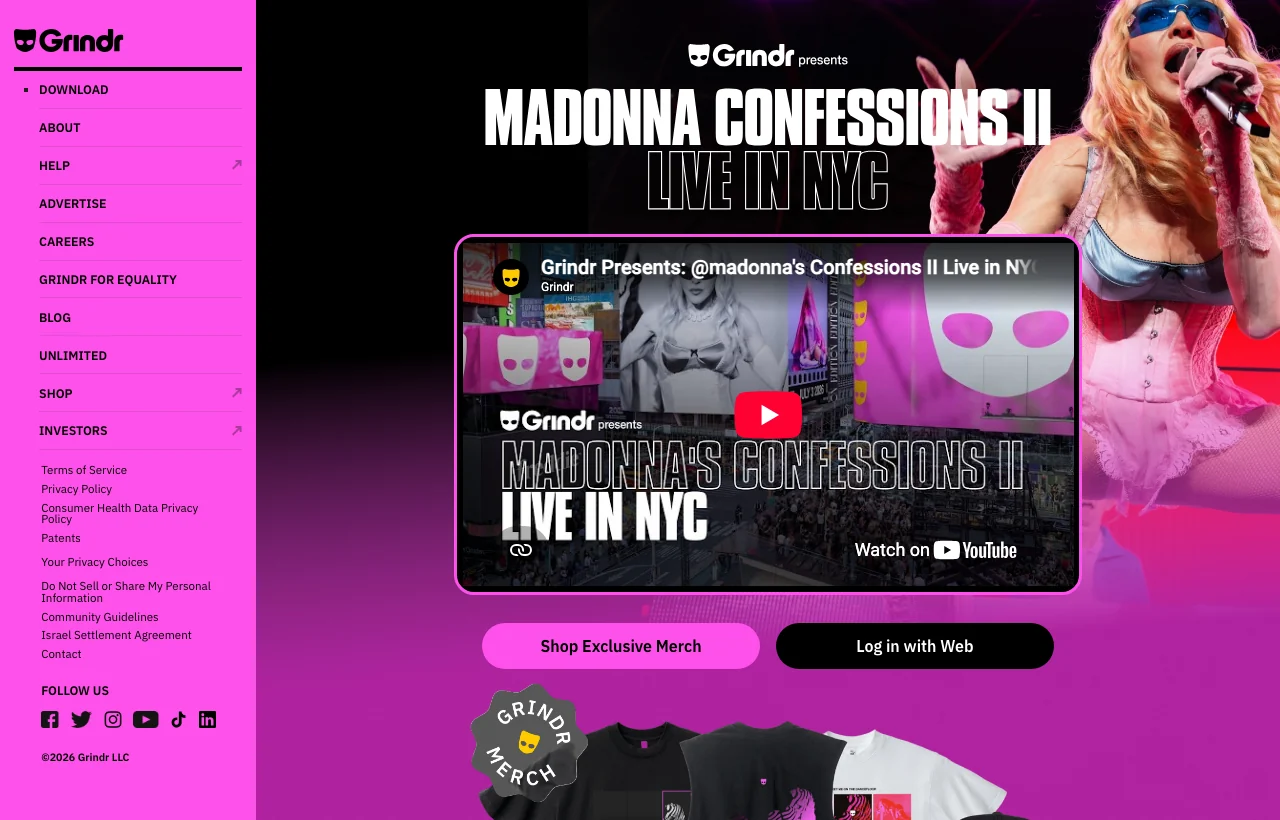
Grindr is the fastest option for seeing nearby gay, bi, trans and queer profiles. The location-led grid, profile tags, albums, taps and direct chat keep discovery immediate, while Explore opens other locations. Free access is usable, but XTRA expands the grid and filters, and Unlimited adds Incognito, Viewed Me, read receipts, message unsend and global chat through Explore. UK users must complete one-time age assurance. Its proximity model is efficient, but users should hide exact distance and avoid sharing a home location too early.
SCRUFF
Best detailed profiles
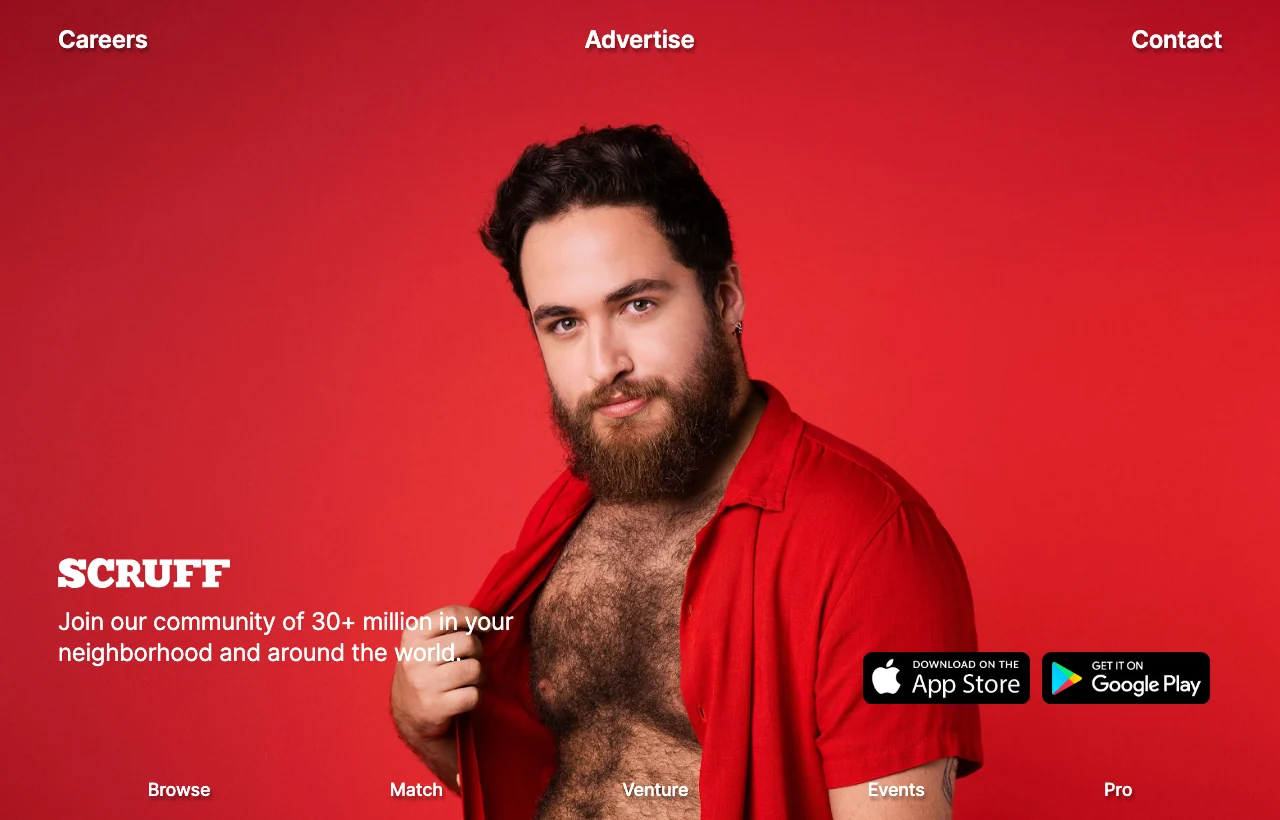
SCRUFF combines nearby browsing with richer profiles, travel discovery, events and a strong community identity. Free members can browse and chat; SCRUFF Pro expands grids and search results, removes ads, adds Stealth Mode, increases private-album capacity and supports extensive filtering. Profile verification compares live poses with the main photo, and UK users face mandatory age verification. It is a strong alternative to Grindr for men who want more context around interests, travel and community without losing location-based discovery.
Taimi
Best LGBTQ+ social option
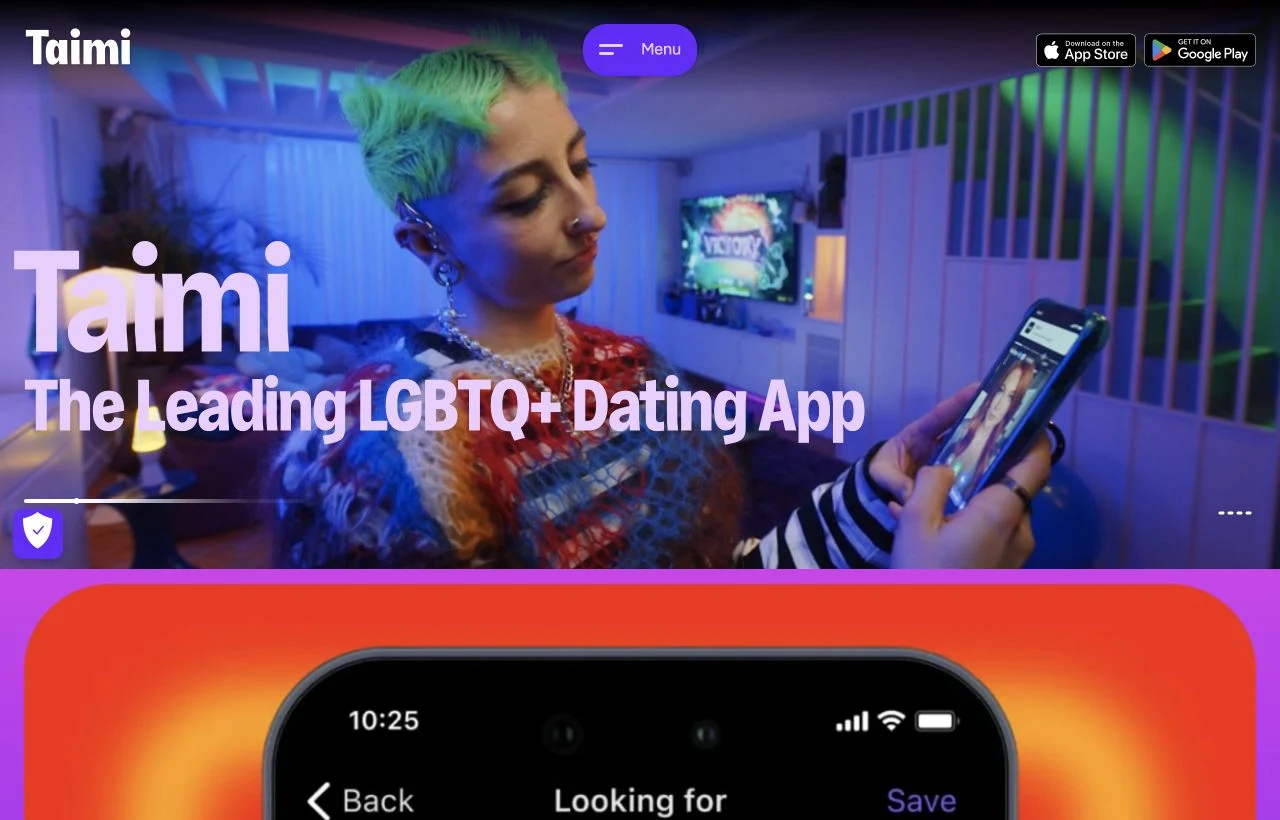
Taimi is an LGBTQ+ social and dating app rather than a men-only service. It combines matching, chat, profile content and community features, making it useful for users who want friendships and social interaction alongside dates. The broader identity mix is more inclusive than a gay-men-only grid, but local results may be less concentrated than Grindr. Taimi is best for users who want an LGBTQ+ environment with more ways to interact than proximity and direct messages alone.
Feeld
Best open-minded option
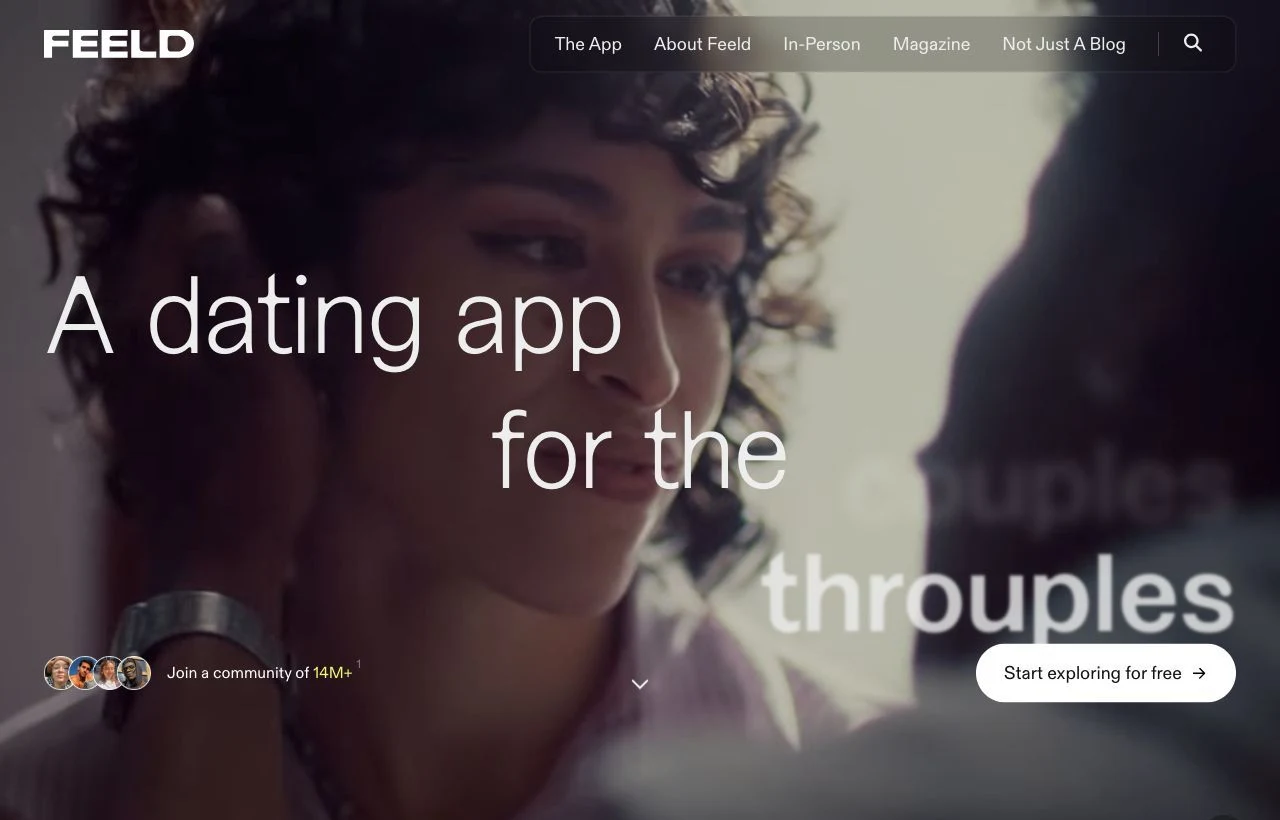
Feeld supports a wide range of genders, sexualities and relationship structures, including singles and couples. It is most relevant to gay and queer users exploring non-monogamy, kink or connections outside conventional labels. Profiles can be linked with a partner and desires can be stated directly. The community is smaller than the largest mainstream apps, but the vocabulary is more precise. It is not the best choice for a traditional gay-men-only experience; it is strongest when openness about identity and relationship structure matters.
Tinder
Best mainstream pool
Tinder provides a large mainstream pool and lets users set gender and orientation preferences. Free matching and messaging after a mutual like make the basic app functional, while paid tiers mainly increase control, visibility and discovery. Its strength is local volume; its weakness is limited context before a match. Gay men seeking a relationship should use clear profile text and filters, because the same pool includes casual and undecided users.
Match
Best relationship profiles
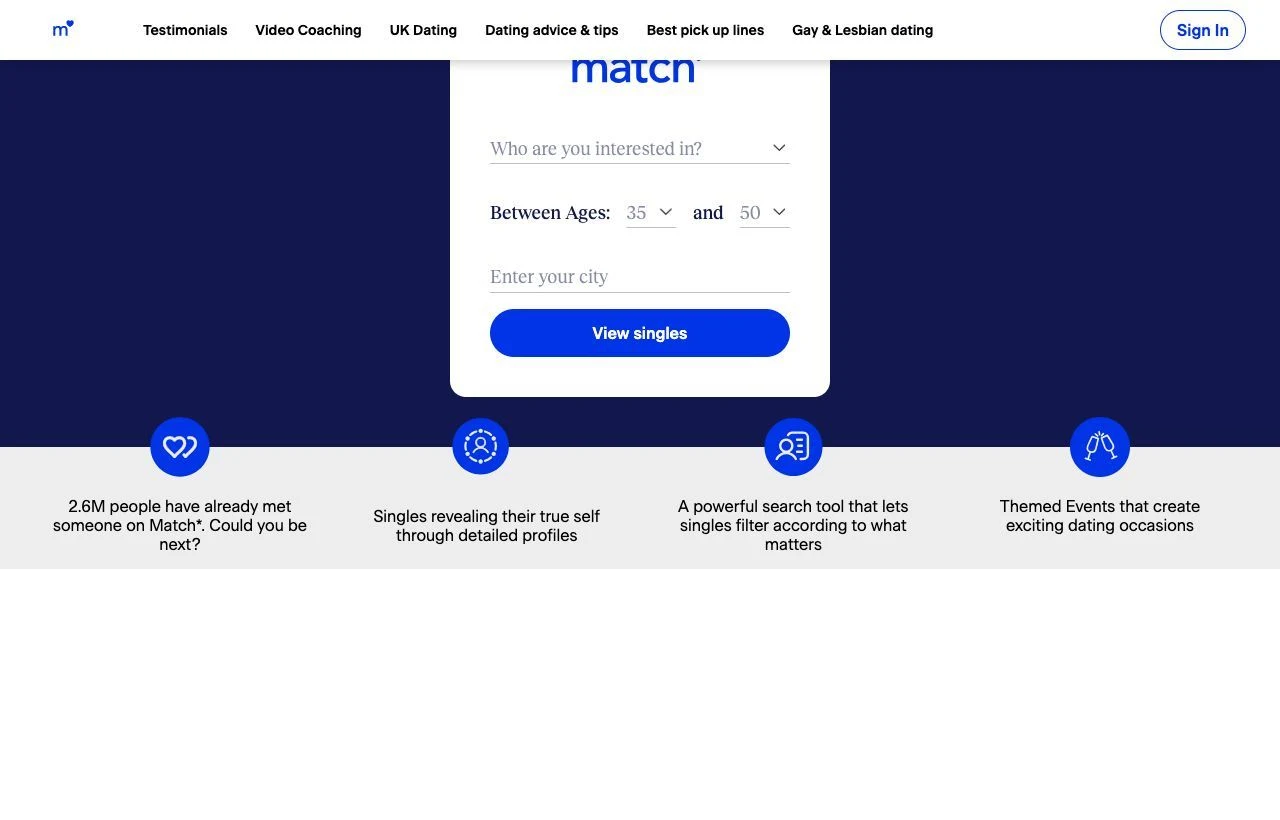
Match is the most profile-led mainstream option in this list. Search, written profiles and relationship preferences provide more context than a photo-first grid, and the UK member base makes it useful outside major-city LGBTQ+ app clusters. It is not a dedicated gay community and full messaging generally requires paid access, but it suits men who want deliberate dating and are prepared to describe their relationship goals in detail.
Gaydar
Best verified grid
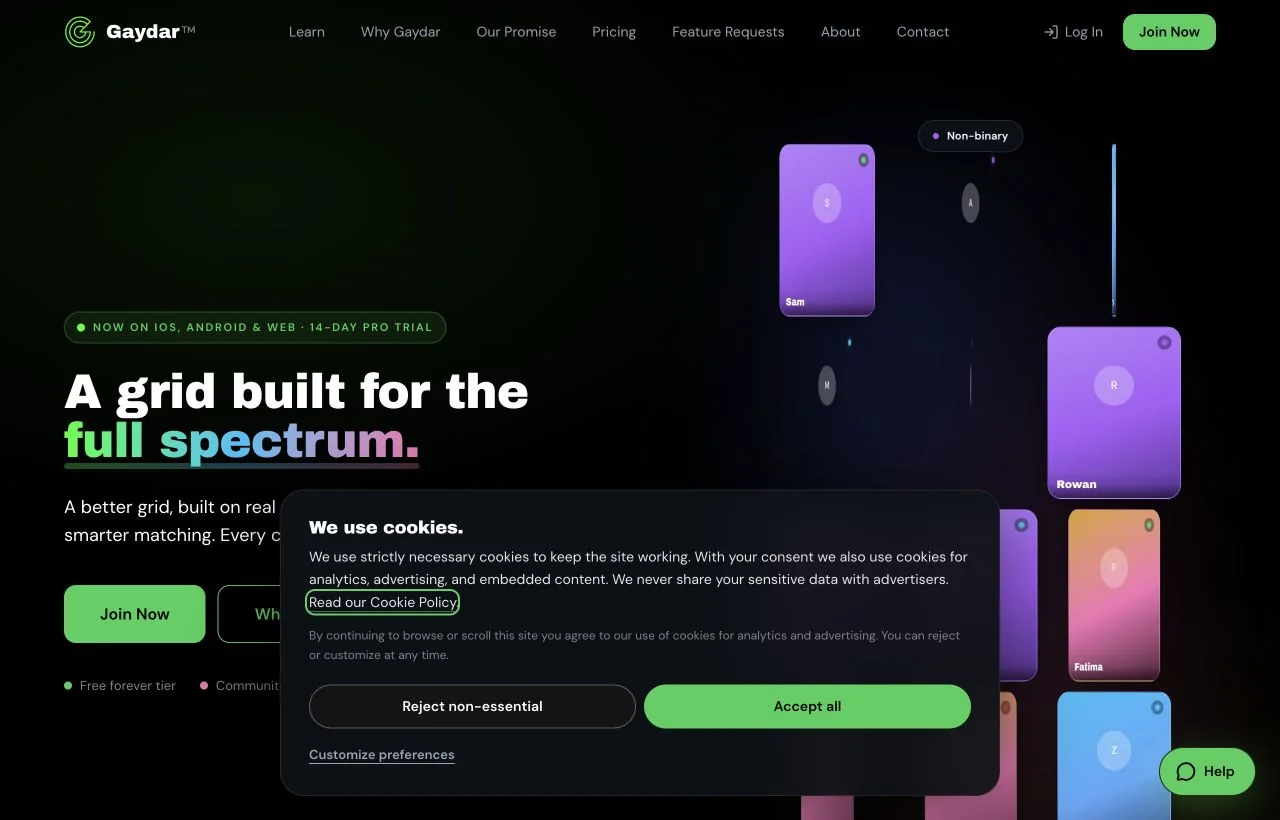
Gaydar is one of the longest-running gay dating brands connected with the UK. Its rebuilt service uses a mutual-preference grid, phone verification for every signup and an optional Verified Selfie that expires after 365 days. A free tier covers the core experience, while new users receive a 14-day Pro trial and Pro adds more filters and control. Compared with Grindr, Gaydar places more emphasis on authenticated profiles and preference alignment; compared with Match or Hinge, it remains directly centred on LGBTQ+ discovery. Activity still varies by city, age and time of day.
ROMEO
Best international network
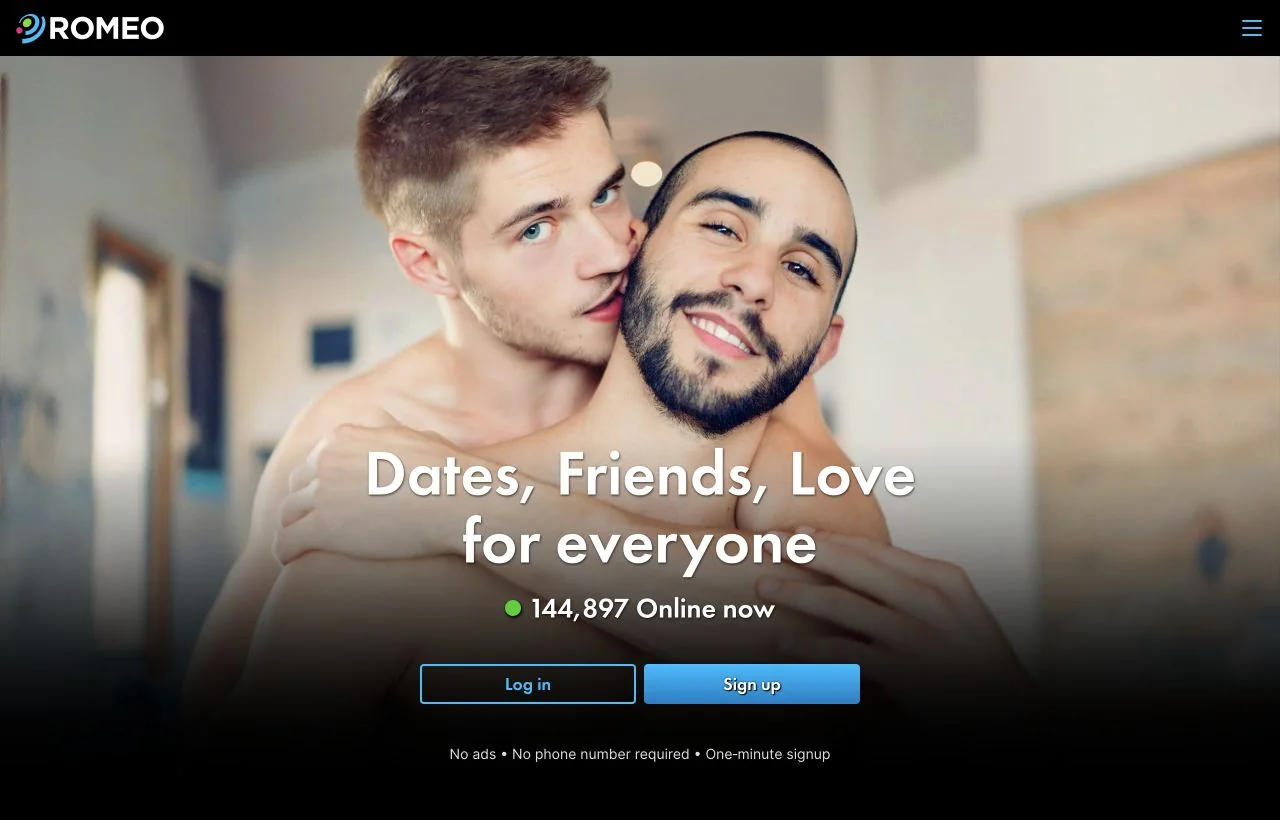
ROMEO is an international network for gay, bisexual and trans men seeking dates, friends and relationships. The service reports three million members, more than 100,000 people online at a time, around 700 million messages each month and over 15,000 new users a day. Profiles, nearby discovery, chat and interest groups create a broader social experience than a simple swipe queue. Its scale is global rather than UK-specific, so local density depends on location. ROMEO is most useful for users who value community groups and detailed browsing alongside direct conversation.
OkCupid
Best compatibility questions
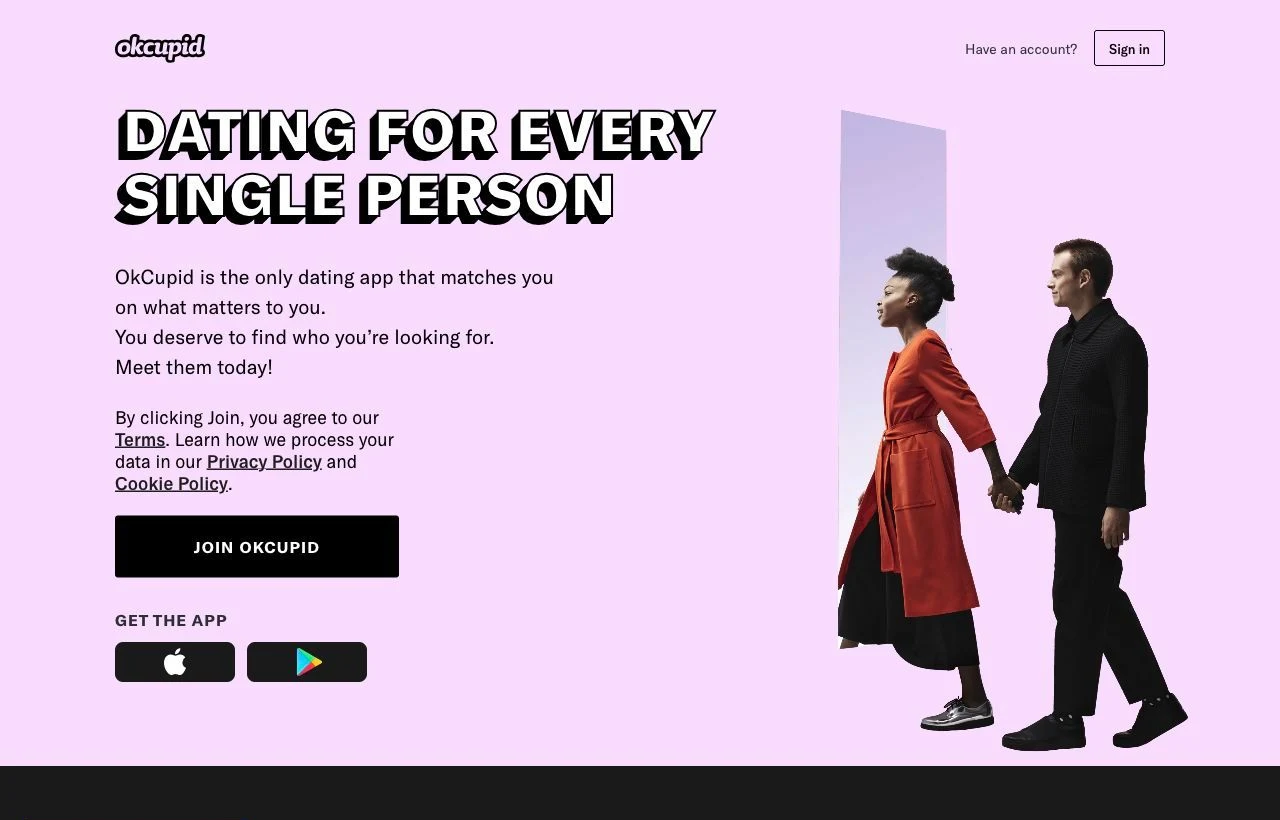
OkCupid is a mainstream option with extensive orientation and identity fields, detailed written prompts and a compatibility-question system. Gay and bisexual men can specify who they want to meet without relying on a separate straight-dating mode. Matching and conversation have a usable free route, while paid access mainly adds visibility and additional control. It is less immediate than a distance-ordered grid and local activity can be lower than Tinder or Grindr, but it provides much more context for assessing values, politics, lifestyle and relationship expectations before meeting.
Hinge
Best prompt-led dating
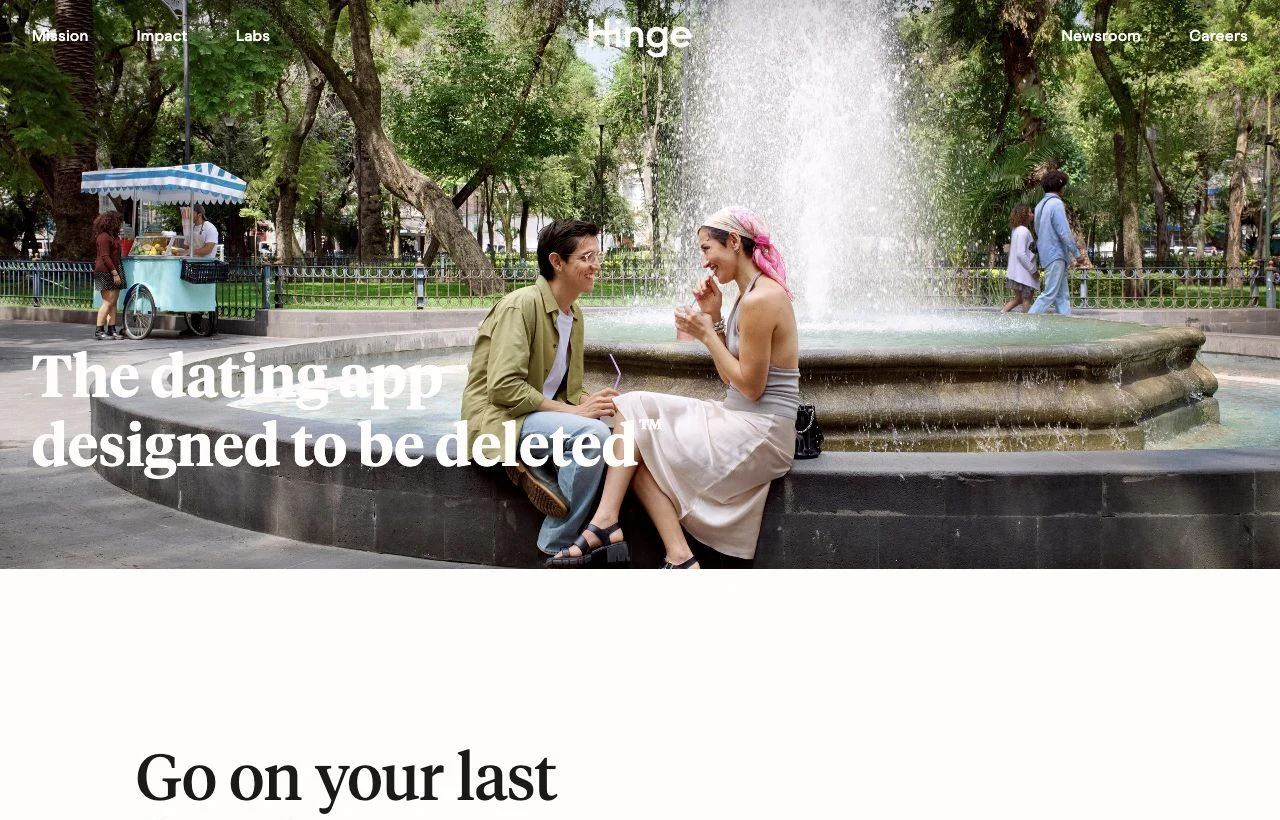
Hinge is a mainstream relationship app that supports same-gender matching and gives each profile more context through prompts, captions and specific reactions to photos or answers. Free members can send a limited number of considered likes, match and message, while paid tiers expand likes, filters and visibility. It is a stronger option for gay men seeking relationship-led conversations than for instant nearby discovery. The pool is broader than a specialist gay community, so intentions and identity are less uniform, but the profile format makes it easier to start with something more meaningful than a blank greeting.
Choosing between a gay dating app and a relationship site
Community size is only one part of the decision. The discovery format, relationship goals and location settings determine whether an app feels useful and appropriately private in regular use.
Match the format to your goal
Nearby grids are efficient for immediate local discovery. Profile-led sites provide more context for long-term compatibility before contact.
Control location exposure
Exact distance can reveal routine or residence. Hide distance where possible and do not send a precise live location to a new match.
Use identity and intention fields
Orientation alone does not explain whether someone wants dates, friendship, a relationship or casual contact. State both identity and goal clearly.
Understand UK age assurance
Adult LGBTQ+ apps may require a selfie, facial age estimation or identification in the UK. Review the platform's data handling before submitting verification.
Gay Dating Sites and Apps for UK Men FAQ
Which gay dating app has free messaging?
Grindr, SCRUFF, Tinder, Taimi and Feeld provide forms of free matching or messaging, although limits and premium enhancements differ.
Is Grindr only for hookups?
No. Members use it for dates, relationships, friends and casual meetings, but the fast proximity-led design means intentions need to be stated explicitly.
Which app is better for serious relationships?
Match provides the most profile-led mainstream process, while SCRUFF gives more community context than a minimal nearby grid. Results still depend on local membership.
How do I protect private photos?
Use in-app albums, share only after conversation and assume any recipient can retain or reproduce an image even when a platform offers screenshot controls.